Sunday, March 29, 2026

Trans woman attacked in East African refugee camp

Extract from fundraiser email update to friends of Nakafeero and her tribe of Ugandan LGBTQ refugees in East Africa.

By Per Koch, Oslo, Norway

The UNHCR continues to insist that we should not name the country as this may draw attention to the fact that they do help queer refugees in the camp. That is understandable, but it makes it more complicated for us to communicate what is happening. But do not worry, we will find ways of doing that regardless.

Since our last report most of the members of Nakafeero's group have been through embassy interviews. These are, for obvious reasons, not with American authorities anymore, but as I understand it the Canadians are doing their best to help. 

Some of the refugees have also been sent to medicals. Hopefully this will mean that at least some members of the group will get out of here. If any of you know of any way to get more countries involved, send me an email ( per.koch@aviana.com ).

Nakafeero tells me that a lot of new LGBTQ refugees have arrived in the camp. The current anti-LGBTQ policies of many East African countries are not helping, and it says a lot about how bad this has gotten when queer people flee from one homophobic and transphobic country to another to escape persecution. 

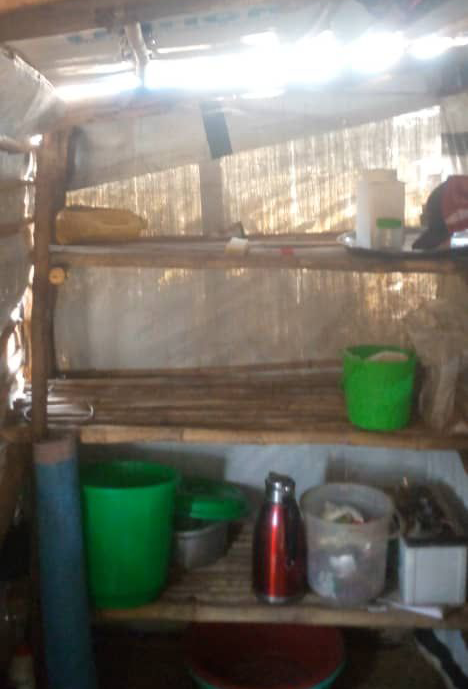
The increasing number of refugees, together  with spiking oil and food prices world wide, also means that the local prices are going up. Nakafeero sent me this photo of their empty food cabinet.

Friday, February 6, 2026

Living as LGBTQ Refugees in East Africa

How is it to live as a LGBTQ refugee from Uganda in a camp in another East African countyr?  Nakafeero tells the story.

By Nakafeero Swabulah, Ugandan LGBTQ refugee in East Africa

[Update regarding country: The UNHCR has asked us not to name a specific country or the refugee camp in this country, as they are worried about the safety of the LGBTQ refugees. The relevant government has anti-LGBTQ legislation and the local culture is often homophobic and transphobic. We are therefore going to refer to this country as East African Country No. 2 - or EAC2 for short.]

I am a proud lesbian and a queer leader advocating for LGBTQ  refugees in east Africa. 

We are group of around 550 LGBTQ members who fled from Kakuma refugee camp in north western Kenya due to homophobia and hostility between different communities that were all against us .I am the leader of around 100 of these refugees, half of whom are kids.

One of the children

We believe we have better hope of getting asylum in a LGBTQ-friendly country here in the EAC2 camp. But it is not as if we are safe here. EAC2  is in many ways a war zone on the border of another war torn country.

Nor is EAC2 known for being LGBTQ friendly. The Wikipedia puts it this way: "LGBTQ persons are met with abuse and discrimination from agents of the government and additionally face stigmatisation among the broader population". We have to live in  a small camp surrounded by main barracks and soldiers are always nagging around with their weapons around the camp's trading center.

Refugees arriving

We have spent many sleepless nights without anything to eat or to drink .

Since we don't have enough shelters to sleep in most of our fellows sleep outside provided shelters. This caused some of lesbians to be raped. Many of them have gotten HIV, and many have become pregnant. 

If anyone wonder why a group of LGBTQ refugees have so many children, this is the main reason, I'm afraid. As far as medical support is concerned, we have to pay for most of it out of our own pockets.

And the young kids need milk, enough care and proper hygiene which is not easy at all under these conditions.

We do not, for instance, have enough toilets and bathrooms, in the camp. 

Since most of us sleep outside we are also being attacked by some dangerous wild life, such as snakes and scorpions which are very dangerous to us. To give one example: Yesterday we found a large snake in our shelter. One of our kids was going to sleep and stepped on it.

Snake found in sleeping quarters

The women among us  use polythene bags throughout our periods which cause infections and itching.

Imagine you can't exercise your rights not even get yourself a job and hang on for a moment? 

We call upon for your support and intervention on advocating for equality of LGBTQ living in fear and distress . We really need attention and assistance mostly on purchasing food and isolate ourselves in our shelter because we can't mingle with other communities who always attack us and leave us miserable, traumatized and tormented.

 And anyone who knows anything about how we can be evacuated to a third country please let us know.

I hope that our humble request will be considered in love and solidarity!

You can donate to our crowdfunder here.

You can follow me over at Mastodon and Bluesky.

Monday, February 2, 2026

U.S. Deportation Policies Put LGBTQ+ Asylum Seekers in Mortal Danger


Advocate reports that the Trump administration is planning to send LGBTQ refugees to countries that might kill them.

[Update regarding country: The UNHCR has asked us not to name a specific country or the refugee camp in this country, as they are worried about the safety of the LGBTQ refugees. The relevant government has anti-LGBTQ legislation and the local culture is often homophobic and transphobic. We are therefore going to refer to this country as East African Country No. 2 - or EAC2 for short.]

The reason Nakafeero and her group of Ugandan LGBTQ refugees moved from the camp in Kenya to a camp in EAC2 was that the EAC2camp was rumored to give some refugees access to asylum in the US and other countries. They were not wrong about this. Some refugees did get access to the US, and right now some are interviewed by Canadian representatives.

Advocate explains  how new U.S. immigration policies under the Trump administration are putting LGBTQ+ asylum seekers in extreme danger by enabling their deportation to countries where they could be imprisoned, tortured, or killed. 

Attorneys and advocates say the government is using third‑country transfer agreements and aggressive courtroom tactics to avoid fully hearing asylum claims, even when applicants have strong evidence of persecution. 

It is unclear to me if this also applies to Ugandan refugees in the US, or only refugees from other countries who are to be shipped of to Uganda to have their case handled there.

A major concern is a 2025 agreement allowing the U.S. to send asylum seekers to Uganda, a country whose 2023 Anti‑Homosexuality Act includes life imprisonment and the death penalty for LGBTQ+ people. Lawyers report cases in which queer and transgender migrants from other countries - such as Morocco -are being threatened with transfer to Uganda instead of having their claims adjudicated in the U.S. 

"Uganda is not a safe place for LGBTQ people," Bekah Wolf, an attorney with the American Immigration Council who represents LGBTQ+ asylum seekers from multiple countries says.. "The idea that we would send people there to try to adjudicate their protection claims is deeply concerning."

"While the agreement states that transferred individuals will not be returned to their home countries until protection claims are resolved and references international refugee and anti-torture obligations, Wolf said those assurances are largely abstract. The text contains no enforceable standards for evaluating claims, no requirement that Uganda recognize sexual orientation or gender identity as grounds for protection, and no mechanism for independent oversight once a person is transferred."

Let me add that the threat goes beyond public policies in Uganda. Nakafeero fled because her mother and sister were killed by local citizens who were looking for Nakafeero, who had committed the "crime" of being a lesbian. The homophobia and transphobia runs deep.

Per Koch

Wednesday, January 28, 2026

Canada is interviewing refugees in South Sudan

[Update regarding country: The UNHCR has asked us not to name a specific country or the refugee camp in this country, as they are worried about the safety of the LGBTQ refugees. The relevant government has anti-LGBTQ legislation and the local culture is often homophobic and transphobic. We are therefore going to refer to this country as East African Country No. 2 - or EAC2 for short.]

Nakafeero tells me that Canada is accepting quite a few refugees from their camp in EAC2 and that her and her group of LGBTQ refugees may be interviewed soon. 

Whether this will actually give them asylum in Canada remains to be seen, but the very hope of that happening gives them strength.

Nakafeero tells me:

"We are so happy that at least we can see a change here in this camp, compared to what it was in the Kenya Kakuma refugee's camp, when no LGBTQI refugees were accepted while we were in that camp."

The UN refugee agency, UNHCR, has classified the situation in and around EAC2 as an emergency level 1, indicating that UNHCR is urgently stepping up preparedness efforts. This has not been easy, given the severe cuts made by the US government.

Life in the EAC2  camp itself is not getting better, however. Nakafeero tells me that several of her fellows have been sick this last month. We have no confirmation of this, but there are rumors of  people poisoning their food. There are homophobes and transphobes in the camp who do not want to have the LGBTQ refugees there. For the time being Nakafeero and her group stick to packaged food, which is more expensive.

I have added a video message from Nakafeero. Transcript below.


"Hello, I am a queer leader advocating for LGBTQI+ kids in East Africa. I am here kindly requesting for help and support. We are starving with nothing to eat at all. Kids are lacking milk. We are lacking sanitary products as we use polytene bags through our periods, which affect us with aging and some infections. Here we have no medication at all. We really need help and support so that we can pass through this situation. Any coin makes a difference. Love and solidarity."

Per Koch

You can donate to Nakafeero's LGBTQ refugees and their children here

You can follow Nakafeero over at Mastodon and Bluesky.


Sunday, November 30, 2025

More on the LGBTQ refugees in South Sudan


It is time for an update on what is happening to Nakafeero and her extended LGBTQ-family in the refugee camp in East Africa.

By Per Koch, Oslo, Norway

[Update regarding country: The UNHCR has asked us not to name a specific country or the refugee camp in this country, as they are worried about the safety of the LGBTQ refugees. The relevant government has anti-LGBTQ legislation and the local culture is often homophobic and transphobic. We are therefore going to refer to this country as East African Country No. 2 - or EAC2 for short.]


Nakafeero is a young lesbian activist from Uganda leading a group of LGBTQ refugees in a camp in EAC2.

First of all: One young female member of the group passed away in October. This has been hard for the whole group. Nakafeero is now looking after her one year old daughter. I have been speaking to them both on WhatsApp, and I am glad to see that little A  is happily exploring the world around her.  She is a wonderful kid!

(With exception of Nakafeero, I will not use full names here. Attackers have been known to use names to track down gay and trans people.)

A does not know how serious the situation is yet, and that is good, as she deserves some time when she can feel safe and loved by everyone.

Medical problems

She did recently get malaria, however. If treated immediately, you will get well again, but if you do not get access to medicine you might die. The symptoms are a bit like the flu, with fever, nausea, headaches and diarrhea. You really do not want the disease to reach its cramps, fainting and coma phase.  Thanks to your help the members of Nakafeero’s group have never reached that stage in the EAC2 camp, as they have had the funds needed to pay for the treatment.

Being treated for malaria.


Yes, there are doctors in the camp, as well as a small hospital, but the treatment is not free. For a decent malaria treatment, we may look at a bill close to 200 US$. A regular visit to the clinic is often around US$ 100. Any surgery will cost you some US$ 300, and yes – that has been needed in 2025 as well.

All the refugees in the camp have had malaria at one time or the other. It is a disease that returns again and again. So, we need to fill up the small buffer we have to meet emergencies like these.

Schooling

Nakafeero and her crew are also working on providing the kids with some education. They have bought some books and writing appliances for this purpose. This is not much, but better than nothing. We are now trying to find some money for a whiteboard. There are quite a few kids under 15 years old in Nakafeero’s group of LGBTQ refugees.

Electricity

Fixing the electricity
In October their solar panel system broke down. It turned out the battery and the lights were too old. You really need lights at night, both for security purposes and to get things done. Moreover, they need the system to charge their phones. Without their own charging, they will have to pay others. 

In this case we did not have all the funding needed, but I chimed in to get this done. They are now back to normal, at least in this respect.

Seeking asylum

As previously noted, the new American policy as regards refugees, killed off any hope of more members of Nakafeero’s group getting asylum in the USA. 

Recently there have been some signals from the Canadians regarding accepting some refugees from the camp. We will keep you posted as to how that goes. 

Again: If any of you has any information about how to help the refugees out of the camp and into a safer country, please let me know.

The group in Kenya

Some  have asked about what is happening in Kenya. Nakafeero and many of her group moved to EAC2  as there was a – at the time – a realistic chance of getting asylum in the US. However, some stayed behind in the Kenya camp. 

Nakafeero reports that they are doing well, all things considered, even if the threat of anti-LGBTQ violence is as big ever. The protective walls we set up with the help of our donors, are still protecting them. Nakafeero is in continuous contact with them, and we do from time to time provide them with some financial support.

In both camps money is needed for food and medicine. The UN and various NGOs do provide them with the basics, but that is in no way enough to give the kids enough of the kind of nutritious food they need to grow and thrive. This applies to the adults, as well, obviously. And sometimes, just sometimes, they – as all of us – need some extra to celebrate friendship, life and hope.

So I hope you can help us with some funds so that we can help the group survive in the year to come. Any amount is of help!

You can donate over at FundRazr.


Stop in American funding and increased anti-LGBTQ activism make life hard for queer Africans

An article by Lucy Middleton highlights the worsening plight of LGBTQ+ refugees in East Africa, particularly those displaced to one of EAC2's refugee camps. 

[Update regarding country: The UNHCR has asked us not to name a specific country or the refugee camp in this country, as they are worried about the safety of the LGBTQ refugees. The relevant government has anti-LGBTQ legislation and the local culture is often homophobic and transphobic. We are therefore going to refer to this country as East African Country No. 2 - or EAC2 for short.]

Many fled Uganda and Kenya due to harsh anti-LGBTQ+ laws and rising violence, only to encounter renewed hostility, abuse, and forced relocations in EAC2.

Refugees report being harassed by government officials and threatened by local communities, leaving them fearful and confined indoors with limited access to food and safety.

The situation has been exacerbated by global aid cuts, Middleton argues, notably U.S. funding freezes under President Donald Trump, which have strained refugee services and halted resettlement programs. Asylum seekers who once hoped for relocation to safer countries now face stalled interviews and shrinking opportunities, while Western nations tighten asylum rules. Organizations like Rainbow Railroad note a sharp rise in requests for help, underscoring the growing insecurity.

Meanwhile, anti-LGBTQ+ legislation continues to spread across Africa, with countries such as Uganda, Ghana, Burkina Faso, and Mali enacting or proposing harsh laws. Refugees describe life in camps as dire, with poor housing, no education, and constant danger. Many express despair, longing for evacuation or a safe return home, though such options remain perilous.

Read the article over at Context.

Photo from South Sudan by  REUTERS/Samir Bol

Thursday, May 22, 2025

Severe danger facing LGBTQ refugees in camp in South Sudan


My Ugandan LGBTQ refugee friends in the GΓΈrom* camp in South Sudan are facing a severe threat. The South Sudan authorities are forcing them to leave the camp and move into Juba, the capital of the country.

The UNHCR first managed to stop this from happening, but from what I hear now, they have given in to the pressure from the authorities. The UNHCR says they are going to help the LGBTQ refugees in Juba, but since the South Sudanese insist that the refugees are not to live together in one area, this may be difficult.

The refugees have not been offered transport or new places to live. In other words: They must pay for this themselves, which is going to be a huge challenge.

Needless to say, the refugees will have less protection in the city than in the camp, and given the rampant homophobia and transphobia in South Sudan, their lives may be at risk.

I have contacted UNHCR for more information. If more do the same, this may mobilize more resources in the agency to stop this from happening. 

I suggest you send a polite email to Olga Sarrado, Global Spokesperson, East and Horn of Africa, at sarrado@unhcr.org voicing your concern. Copy the United Nations High Commissioner for Refugees (UNHCR) Representation in South Sudan  at ssdjuprot@unhcr.org as well as Faith Kasina at kasina@unhcr.org .

We are now trying to build up some funds that can serve as a buffer if they truly have to move to the city. Go to our fundraiser page to donate. Any amount helps.

Per Koch
Oslo, Norway

* The name of the camp ("GΓΈrΓΈm," but with o's) is misspelled deliberately to stop the South Sudan authorities from finding this site and identifying the LGBTQ refugees.


UPDATE OF MAY 23 WITH INFORMATION FROM UNHCR

A representative of UNHCR has provided me with the following information: 

UNHCR, the UN Refugee Agency, is aware of the request by the Government of South Sudan, through the Commission for Refugee Affairs (CRA), for LGBTIQ+ asylum-seekers to relocate from the G*rom refugee settlement to Juba Town. According to the CRA, the request is based on the current security situation in G*rom, where hostility from host communities and local authorities toward the presence of LGBTIQ+ individuals has increased.

While UNHCR has been working to process resettlement cases for extremely vulnerable refugees, including some LGBTIQ+ asylum-seekers and others with protection needs, recent reductions in resettlement quotas have limited departures. To date, only 49 asylum-seekers have been resettled to third countries. While efforts continue to secure additional resettlement opportunities, there is currently no immediate prospect of resettlement for most of these cases. Local integration in Juba or other parts of South Sudan is likely to be the most viable option for many. 

Should LGBTIQ+ asylum-seekers choose to move to Juba Town, UNHCR will continue to provide legal protection and advocate with humanitarian partners to ensure access to basic assistance for urban refugees.

In addition, UNHCR is advocating with authorities to avoid any forced evictions from G*rom, as such actions would significantly heighten the security and survival risks for affected individuals. Unfortunately, neither UNHCR nor its partners currently have funding to provide an immediate life-saving response should forced relocation occur.


Photo: dk_photos

Saturday, May 3, 2025

An update on the situation in East Africa

Nakafeero updates me continuously on the situation in the refugee camp in South Sudan (which I will not name out of fear of attacks against LGBTQ refugees).

The good news first:

Food for Eid celebrations.
In spite of armed clashes in South Sudan itself, these have not affected the refugees directly. We see nothing like the horrifying attacks on refugee camps in Sudan, the country in the north

Moreover, Trump's destruction of USAID has so far not affected our friends greatly, although that might change soon. Some NGOs have already stopped helping.

UNHCR seems to have handled a recent threat against the LGBTQ refugees in the camp in a constructive way. Again I cannot give you details out of fear of identification and repercussions, but I would like to thank everyone who contributed to this outcome.

We are now trying to build up some reserves to handle sudden and unexpected events. 

We have had a few events like that lately, like an LGBTQ refugee in South Sudan who needed treatment for pneumonia. (They are now fine!) In March one of the members of Nakafeero's LGBTQ community was violently attacked  over in the Kakuma refugee camp in Kenya. We used funds provided by you to pay for the hospital bill.

We have also used some funds to arrange local Eid and Easter celebrations. It is extremely important to create positive and life affirming spaces in places like these.

Nakafeero tells me that the refugees in South Sudan as well as her people in Kakukma in Kenya are in need of:

Sanitary pads
Pampers for babies
Milk for babies
Knickers
Food stuff
Some shoes for babies and adults

Any help is greatly appreciated!

You can donate here.

Per Koch, Oslo, Norway

Tuesday, March 11, 2025

Nakafeero reports on the needs of her LGBTQ refugees in Kenya and South Sudan

Here's a message from Nakafeero on the challenges faced by the LGBTQ refugees in Kenya and South Sudan:

"And am kindly requesting you if you can get some money to transport some of our queer refugee's from Kakuma refugee camp in Kenya to South Sudan.

And even creating a fence in South Sudan for our protection.

From Nakafeero's latest TikTok video

It’s been a month now and the situation in Kakuma refugee camp has reached a critical point. Refugees here are facing unimaginable challenges as they struggle with severe shortages of water and food.

Many families are going days without adequate sustenance and the lack of clean water which leads to health risks, particularly for children and the elderly.

These resilient individuals have already endured so much on their journeys to safety and now they are facing even graver hardships. It's heartbreaking to witness the toll this is taking on their physical and mental well-being.

We must raise awareness and urge for support and assistance to help alleviate their suffering. Every voice matters, every action counts. Let’s stand in solidarity with our brothers and sisters in Kakuma and demand change.

Please share this post to spread the word and consider supporting them in any way. Together, we can make a difference.

Love and solidarity πŸ™ 🏳️‍🌈 ​
Nakafeero"

..........................................

Nakafeero tells me that they are in particular need of:

Rice
Cooking oil
Yellow bananas
Passion fruit
Ingredients
Cold water
Sweet potatoes
Flour for making chapati to eat on iftali

I'll make sure they get your donation.

Per Koch

Follow Nakafeero on TikTok and watch her latest report over there.

To donate, go to our Fundrazr page!

Wednesday, February 19, 2025

The LGBTQ refugees in in East Africa are facing new problems - A Progress Report


Dramatic policy shifts and local floods make life uncertain for the refugees in East Africa.

As reported Nakafeero is now in a camp in South Sudan, where she is exploring the possibility of getting resettlement for as many of her people as possible. 

(We are not naming the camp in South Sudan for security purposes. The local police use web search to identify LGBTQ refugees.)

At the same time we keep track of what is happening to those who remain in Kakuma in Kenya.

Resettlement

Let us look at the resettlement first.

Before Trump took over in Washington, quite a few LGBTQ refugees had been allowed entry into the US from the South Sudan camp, assisted by American NGOs and the American government. This is why some of Nakafeero's group went to South Sudan. This policy was immediately cancelled when the new administration took over.

We doubt very much that it will be restarted, given the current regime's anti-LGBTQ rhetoric and policies. 

Because of this the refugees are looking for alternative destinations, Canada being one of them. If you have any information regarding open doors, let us know.

Nakafeero & Co have put any further journeys from Kenya to South Sudan on hold for the time being.

The dismantling of USAID

The Trump administration's attempted dismantling of  the American development agency USAID has also caused chaos and despair. Keep in mind that many NGOs get support from USAID, and many of them have had to reduce their activity levels.

Secretary of State Marco Rubio has announced waivers for life-saving humanitarian assistance, but Amnesty reports that the United States government’s sweeping freeze on foreign aid is severely imperiling the human rights of refugees, civilians in armed conflict areas and individuals fleeing persecution in - for instance - Myanmar.

A judge has ordered the Trump administration to temporarily allow funds for foreign aid to flow again, pointing to the damage  done to the nonprofits and other organizations that help carry out U.S. assistance overseas. The order applies to contracts that were in place before Trump issued his Jan. 20 executive order freezing foreign assistance.

So far our friends in Kakuma in Kenya and the camp in South Sudan have not registered a stop in aid from the UNHCR and the local NGOs. However, we are preparing for the worst, including the possibility that the refugees would have to buy all food, medicine and clothing with their own funds.

We will let you know how that goes.

Kakuma

The situation over Kenya Kakuma refugee's camp has been bad as they got some heavy rain which destroyed the property of some people, Nakafeero tells me: 

"And Scorpions are attaching people and snake's since the place is very cold."

The group lost plates, cups and clothes, Nakafeero says:  

"And we probably need  to cement barriers inside ourselves, so that snakes and Scorpions or harmful insects can't attack us."

Any help will be appreciated!

Social media problems

We have faced some serious challenges with Nakafeero's Mastodon-account. Mastodon is a European twitter-alternative that is supposed to be both color blind and LGBTQ-inclusive.

Nevertheless, she has had several accounts closed down, most likely because she has linked to our fundrzr-account, which is - for some bizarre reason - seen as spam. There is nothing in the code of conduct that implies that you are not allowed to ask people for help. For some reason my account has not been affected. 

She has had to put up another account over at https://masto.ai/@Nakafeero@mas.to . If you have followed her before or want to talk to her now, that is one place to do so.  She can also be contacted over at Bluesky at  https://bsky.app/profile/nakafeeroswabulah.bsky.social . We have also a common account over at Mastodon: https://lgbtqia.space/@LGBTQ_Kakuma 

Per Koch

per.koch@aviana.com

If you want to help Nakafeero and her friends, donate over at our Fundrzr page!

Thursday, January 23, 2025

Donald Trump ends the arrival of persecuted LGBTQ refugees in the US


The US State Department has cancelled travel for refugees already approved to fly to the United States. Trump has suspended the resettlement program that has provided a safe haven for many LGBTQ people fleeing persecution.

Our friends in the camp in South Sudan have hoped to be allowed entry into the US. Indeed, some of them are already there. But for the remaining the future looks bleak.

The New York Times writes:

"The State Department abruptly canceled travel for thousands of refugees already approved to fly to the United States, days before a deadline that President Trump had set for suspending the resettlement program that provides safe haven for people fleeing persecution.

The cancellation of the flights comes on the heels of an executive order signed by Mr. Trump on Monday that indefinitely paused the refugee resettlement. The order effectively grinds to a halt the process of bringing refugees into the country, which involves multiple federal agencies, as well as nonprofits that receive the newcomers."

More than 10,000 refugees were currently in the pipeline to travel to the United States.

The Hill reports that a  Day 1 order from Trump pauses the refugee program for a minimum of three months, calling for the departments of State and of Homeland Security to issue a report within 90 days detailing whether it’s in the nation’s interests to resume the admission of refugees. 

There is little reason to believe that Trump will open doors again, given his racist anti-immigrant rhetoric, unless the decision is successfully challenged in court.

Trump has also shut down the CBP One app who has been used by the American government to  create an orderly way for migrants to enter the U.S. and to reduce illegal border crossings.

Our contacts in South Sudan refers to a message from Welcome.US, an American organization built to inspire, mobilize, and empower Americans from all corners of the country to welcome and support those seeking refuge in the country. 

Welcome.US reports that The U.S. Refugee Admissions Program (USRAP) will be suspended on Jan. 27, until further notice, except on a case-by-case basis. This includes the Welcome Corps, a private sponsorship program under USRAP. The Welcome Corps, launched in 2023 by the U.S. State Department, allows Americans to privately sponsor refugees to come to safety in the United States.

At the moment the LGBTQ refugees in South Sudan are caught in Limbo as far as the US is concerned.  They are looking into the possibility of finding refuge in Canada. I will come back to you with more info on that when available.

In the meantime: Here is an article on the life of a trans woman living in a refugee camp in South Sudan. It describes the challenges they are facing in Uganda, Kenya and South Sudan.

Image: Maria Lapteva

Note that I am withholding the name of the refugee camp in South Sudan as the local authorities are searching the web for information that can help them identify LGBTQ refugees.


Tuesday, October 22, 2024

The queer community in Kenya has condemned the government’s policy of discriminating against LGBTQ asylum seekers

The queer community in Kenya has launched a petition condemning the government's discrimination against LGBTQ asylum seekers.

This action comes in response to comments made by Refugee Affairs Commissioner John Burugu, who stated that Kenya would not consider persecution based on sexual orientation or gender identity as sufficient grounds for asylum.

The petition accuses Kenya's Department of Refugee Services of putting queer asylum seekers at greater risk of persecution, violence, and exploitation.

The Kenya 2021 Refugees Act does not explicitly recognize queer people among vulnerable individuals fleeing persecution. The law only recognizes refugees or asylum seekers as people who are persecuted based on race, religion, nationality, political opinion, or membership of a social group. 

LGBTQ asylum seekers face prolonged waiting periods, sometimes up to a decade, for decisions on their applications.

The petition has garnered over 200 signatures and will be presented to various Kenyan and international human rights bodies.

Petitioners are calling for immediate action to protect LGBTQ asylum seekers and ensure their rights are respected under international law.

The situation for LGBTQ asylum seekers in Kenya has reportedly worsened since 2017.

There are an estimated 1,000 LGBTQ refugees in Kenya, with many fleeing from neighboring countries like Uganda.

The Center for Minority Rights and Strategic Litigation, a Kenyan LGBTQ rights group, has criticized the government's stance, stating that it violates both national and international laws protecting refugees.

The petition aims to address discrimination, expedite application processes, and ensure representation for LGBTQ asylum seekers in global decision-making forums

Saturday, October 19, 2024

LGBTQ Kakuma refugees decide to move to South Sudan camp in hope of repatriation

Nakafeero and friend.
Queer LGBTQ activists like Nakafeero and Elvis are taking their groups of Ugandan refugees to a camp in South Sudan (name withheld for security purposes), where there are real chances of being repatriated to a much more safer country.

As reported many of the LGBTQ refugees in the Kakuma camp in Kenya are feeling increasingly unsafe. They have gotten messages from a public official noting that the Kenyan government is not recognizing the LGBTQ status of any refugee in their camp and that being queer or trans is not seen as a valid reason for getting protection as refugees.

Here's an email Edward, a member of the Kakuma LGBTQ-community, got from a Kenyan commissioner: 

Edward, The Refugee Act No. 10 of 2021 has NO PROVISION on sexual orientation as a criteria for admission into the country as an Asylum Seeker. Be advised that such cannot therefore form a basis of your being recognized through RSD to be a refugee. You cannot and shall not be granted status on basis of your sexual orientation. Neither does the Kenya Constitution recognize such things as Human Rights. Your continued stay in Kenya is therefore not based on Refugee Law and you may be arrested for being in Kenya illegally. Be advised accordingly. John Burugu Commissioner

The refugee camp in South Sudan is not necessarily a safer place for the Ugandan refugees, but both the Canadian and US governments have officials in place who are organizing repatriation for refugees, including those LGBTQ.

Elvis, a friend and ally of Nakafeero, has already taken their group of around 10 refugees to the camp and they tell me that "another 20 mates have been confirmed resettled to Canada now totaling to about 50 at the moment as the rest of us await for the πŸ‡ΊπŸ‡Έ USA embassy upcoming this month."

Unlike the Kakuma camp, the South Sudan camp is seeing the end of its life. South Sudanese refugees are being moved out, and several governments are helping resettle the non-Sudanese ones. In other words: Our LGBTQ-refugees are hopeful that they too will be given refugee elsewhere.

The plan now is to move as many of the Ugandan LGBTQ-refugees from Kakuma in Kenya to South Sudan. That will take some time and cost some money. We will keep you posted on how that goes. In the meantime we still need your support, ensuring that the refugees have the necessities needed: food, sanitary products, medicine and so one.

We are also working on a school project for the kids in Kakuma and South Sudan. Both camps provide rudimentary schooling for the children, but children of LGBTQ-refugees are harassed by both adults and other kids, and going to school goes from being directly unpleasant to straight out dangerous. Because of this the plan is to home school the kids. I will let you know more about this soon.

Nakafeero, Elvis and their extended LGBTQ families in Kakuma and South Sudan continue to need your help. Any amount is welcome!

Nakafeero & Co's crowd funding.

Elvis & Co's crowd funding.

Per Koch
Oslo, Norway

Thursday, September 19, 2024

Where to find hope of escape: In Kenya or South Sudan?

Rainbow over South Sudan, photo taken by Nakafeero.

Ugandan LGBTQ-refugees in Kenya are facing a dilemma: Should they stay in the Kakuma camp, with no hope for resettlement or should they go to a camp in South Sudan (name withheld for security purposes), which seems to give them hope of resettlement in more LGBTQ-friendly countries.

By Per Koch, Oslo, Norway

Nakafeero and her around 90 LGBTQ refugees have spent years in the Kakuma refugee camp in Kenya.  They tell horrifying stories about how they was treated in Uganda. Nakafeero herself lost her sister and mother to the local homophobic mob.

You might say that they chose to go to Kenya of their own free will, and that they are also free to leave. Which is all true - on paper. You may leave a refugee camp. But where do you go? 

As long as you are a refugee you do not have the rights of regular citizens, as in to settle down, get a job, find a new home or do any of the things free citizens take for granted.

Hate crimes in the refugee camps
Nakafeero with food funded through donations.

Moreover, as an LGBTQ person you are vulnerable to attacks from haters in the camp. Many Ugandan LGBTQ refugees live in camps in Kenya and South Sudan, countries which are both governed by governments hostile to queer and trans people. 

The Kenyan government may not protect LGBTQ hate crimes in the way the Ugandan government does, but nor do they provide queer people with the protection of the law.

I do not think we have to doubt that the UN wants to help LGBTQ refugees, but they are severely restrained by the fact that they have to be on good terms with the local government if they want to make the camps work as well as possible. So, that part of the story is - as they say - "complicated".

As I have documented before, life in the camps is not easy, especially not for LGBTQ refugees, who also face persecution from other people in the camp and - in some cases - the local police. This is serious violence, including murder. This constant fear of violence does something to your mind and your health, turning even a good day into a bad day.

Getting a resettlement status

This explains why the refugees are willing to risk a lot to get out of the camps, and to get refugee status in a more LGBTQ-friendly country. 

This will allow them to restart lives that are now put on hold, to get an education, a good job, start a family, and be a contributor to the wider society.

This is why some of Nakafeero's allies in the Kakuma camp in Kenya have risked moving to a refugee camp in South Sudan. 

This might sound strange, given that South Sudan is a worn torn country with an even more anti-LGBTQ government. But the fact is that the US and Canadian governments have given several of the Ugandan refugees in the  camp legal resettlement  status, starting last year. 

That does not mean that these refugees  can go to the US right away, though. That is a more complex process I do not know enough about right now, but this is clearly seen as progress by the refugees stuck in the kind of limbo these camps represent. 

If I understand this correctly, the UNHCR is in the process of moving all South Sudanese refugees out of the camp as soon as possible. The next goal is to move the remaining foreign refugees out of the country, using the kind of resettlement schemes presented above to achieve this goal.

Nakafeero's fellow LGBTQ leader, Elvis, took their group of 14 refugees from Kakuma to the camp i South Sudan in March. They tell me that the journey was both expensive and scary.  

But they did manage to meet with the US representative and they did get resettlement status (see photo to the right). They are still waiting for resettlement, though, and in the meantime they need help surviving in the camp. There is no time table for resettlement, and no guarantees.

Moving from Kenya to South Sudan?

All of this has made Nakafeero and her group consider their future and the possibility of moving to South Sudan in order to get a similar resettlement status. Nakafeero is in South Sudan right now visiting Elvis, Tina (a transgender activist) and their people, and gathering information of life in the camp. 

I had video meeting with many of them (including a rowdy gang of wonderful kids) a few days ago. Nakafeero took me on a video tour of the local neighborhood in the camp. 

UNHCR have provided them with some kind of tent-like housing, which should at least provide a minimum of protection against the elements.

There are local clinics and food distribution in the South Sudan camp, as well, but like in Kakuma the provisions are not enough. An added complication is that everything is more expensive in South Sudan compared to Kenya. So more funds are needed.

As in Kakuma, one of the major challenges is the lack of latrines. At the moment 300 people share one latrine, and we are looking into ways of helping the LGBTQ group get their own solution.

As you can see, Nakafeero and her allies are now active in both Kakuma and South Sudan. Whether Nakafeero will bring her own group to this camp remains to be decided. We will keep our donors posted. 

The overlap between the two groups requires some pragmatic choices regarding Nakafeero's crowdfunding project, though. The donations given to her and her group will continue to go mainly to her group in Kakuma, but to the extent there are extraordinary expenses that will benefit both communities, we may also use some funds to help her LGBTQ-allies in South Sudan.

If any of our readers know anything about the political and legal aspects of refugee resettlement, please contact me at per.koch@aviana.com. We need all the intel we can get!

Support Nakafeero and her group in Kakuma.

Support Elvis and the group in South Sudan.
Sunday, January 14, 2024

On the situation for LGBTQ-refugees in Kakuma, Kenya – an update

Nakafeero Swabulah, local LGBTQI-leader in Kakuma

Two weeks ago we presented the January UNHCR LGBTQI-report on the Kakuma refugee camp in Kenya. Today we present the views of one of the LGBTQI-leaders and activists in the camp: Nakafeero.

By Per M. Koch

It is great that the UN Refugee Agency UNHCR publishes reports on the lives of LGBTQI refugees in Kakuma. This makes the challenges these refugees face more visible, both inside the UNHCR and in their collaboration with others. This also makes it clear that this is an issue relevant to the human rights principles outlined in the Universal Declaration of Human Rights.

The UN on LGBTQI rights

“So long as people face criminalization, bias and violence based on their sexual orientation, gender identity and sex characteristics, we must redouble our efforts to end this violations,” Antonio Guterres, UN Secretary General, said on 25 September 2018.

Tuesday, January 2, 2024

UNHCR publishes a new briefing note on LGBTIQ+ refugees and asylum-seekers in Kenya


Rainbow over Kakuma.
The United Nations High Commissioner for Refugees, which is responsible for the UN presence in the Kakuma refugee camp in Kenya, has published a new briefing note on LGBTIQ+ refugees and asylum-seekers in Kenya. 

The briefing note provides an overview of UNHCR Kenya’s efforts to improve the overall protection environment for lesbian, gay, bi-sexual, transgender, intersex and queer (LGBTIQ+) refugees in Kenya.

UNHCR note that there are currently some 800 refugees in Kenya. (Our international network covers several hundred of them). The organization notes that the Kenyan government is currently developing refugee regulations to guide the implementation of the Refugees Act of 2021. UNHCR are trying to minimize the impact of provisions that may reduce protection space for LGBTIQ+ refugees. 

Homophobia and transphobia in Kenya

Keep in mind that although Kenya is not like Uganda when it comes to LGBTIQ persecution, their laws are both homophobic and transphobic. Same-sex relations remain criminalized under the Kenyan Penal Code. 

Saturday, November 25, 2023

LGBTQ refugees in the Kakuma refugee camp in Kenya need your help!


Nakafeero Swabulah, also known as Claire,  is a lesbian refugee from Uganda, living in the Kakuma Refugee Camp in Kenya, where she is organizing and coordinating efforts to help LGBTQA+ refugees and their kids.

We ask for your support so that she and her friends can provide them with medication, shelter, food, sanitary pads, milk for babies, detergents, clothes, clean water and more.

LGBTQ persecution in Uganda

The government of Uganda has become increasingly homophobic and transphobic, which has caused Nakafeero and many other and lesbian, gay and trans Ugandans to leave the country. Nakafeero's mother and sister were killed in their home by locals, as the villagers were searching for Nakafeero.

But Nakafeero and her crew of lesbian activists are in no way giving up. They are doing their best to give more than 100 LGBTQA refugees and their kids a better life in the camp. She has provided them with nutritious food, clothes, hygiene products, and – for the kids – toys.


Nakafeeor says:

"I do call upon anyone with support or help to please donate through our FundRazr account so that we can get much needed food, medicines and more." She draws special attention to the need for sanitary pads for the women.

"Thank you so much to anyone who will support us!" Nakafeero adds. "Your support is much appreciated!"

The campaign has already payed for a protective fence

This funding campaign has already made a huge difference for Nakafeero and her people. We have used donations to pay for a metal fence that is now protecting their sleeping area. Although violent attacks from homophobic gangs are still a problem, the refugees can at least sleep safely at night.


A collaboration between Ugandan refugees and European and American activists


The crowdfunding campaign is organized by Nakafeero together with Per and Susanne Koch. The Kochs are living in Oslo, Norway. The three of them are part of an international network of Ugandan refugees and European and American activists. All proceeds from this campaign go to Nakafeero, her crew and the LGBTQA refugees in the Kakuma Refugee Camp.

Supporters will get updates on the work of Nakafeero and her crew.


You can help Nakafeero and her friends by donating to our Fundrzr campaign. Click here to go to the campaign site!

 More about the campaign in these posts on the Fundrazr site:

QR-code for Fundrzr campaign site:
This page was set up by Per Koch, who may be contacted at this address: per.koch@aviana.com.